 Rabbi Emanuel Shahar
Prayer for the land’s harvest — a tradition of Yemen’s sages during a locust plague
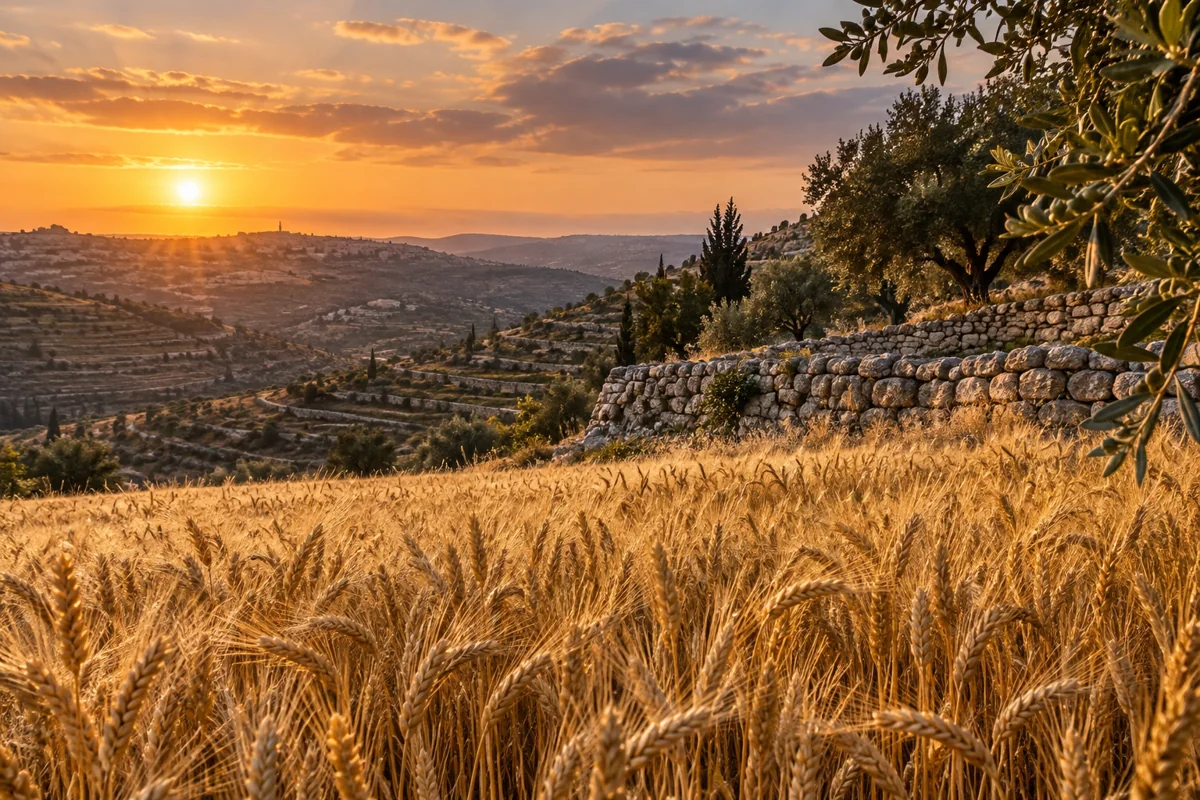
In a world where a family’s livelihood depended on its fields, damage to crops posed a real threat to community life. A swarm of locusts could threaten an entire season’s labor. Alongside efforts to save the grain, Jews turned to prayer and pleas for mercy. Traditions preserved from the sages of Yemen and other communities include supplications expressing dependence on the blessing of the land.
What do the supplications tell us?
The text transmitted in the Yemenite tradition asks the Creator not to let locusts destroy the land’s harvest. Its words convey a simple, tangible concern: bread for the family and protection of the community’s livelihood. Some manuscripts also incorporate combinations of names and writing instructions into the prayers, as is customary in the literature of practical Kabbalah.
Such material should not be read as an agricultural recipe or as evidence that a method of pest control works. Its research value lies in learning about the communities’ beliefs, language and ways of seeking help in difficult times.
Prayer and practical effort
A plea for blessing does not remove the need to act. When an agricultural pest is suspected, treatment should follow professional guidance and local instructions. Plants, substances or dangerous practices should not be used on the basis of an ancient manuscript.
Even without a field of our own, we can understand the meaning of prayer for the harvest. Our food depends on farmers’ work, water, climate and a whole chain of people. Recognizing this can inspire gratitude, prevention of waste and help for those whose livelihoods have suffered.
A local tradition is not a universal instruction
Communities do not all share the same customs. Discussing Yemenite traditions does not mean that everyone should adopt every practice found in them. Questions about the kosher status of locusts are a separate area of Jewish law, dependent on identification and tradition; they cannot be learned from a folk account or the shape of a marking on an insect’s body.
Preserving the source respectfully
When copying a text from a manuscript, it is appropriate to distinguish the original wording from translation and explanation. Judeo-Arabic writing, for example, requires attention to words and context. A record of a communal custom does not necessarily document an act personally performed by the article’s author.
The tradition presents a community seeking to protect its life and livelihood. Studying it can strengthen mutual responsibility and prayer for blessing, without replacing practical knowledge and professional guidance.