 Rabbi Emanuel Shahar
Tu BiShvat seder — the seven species, blessing and character development
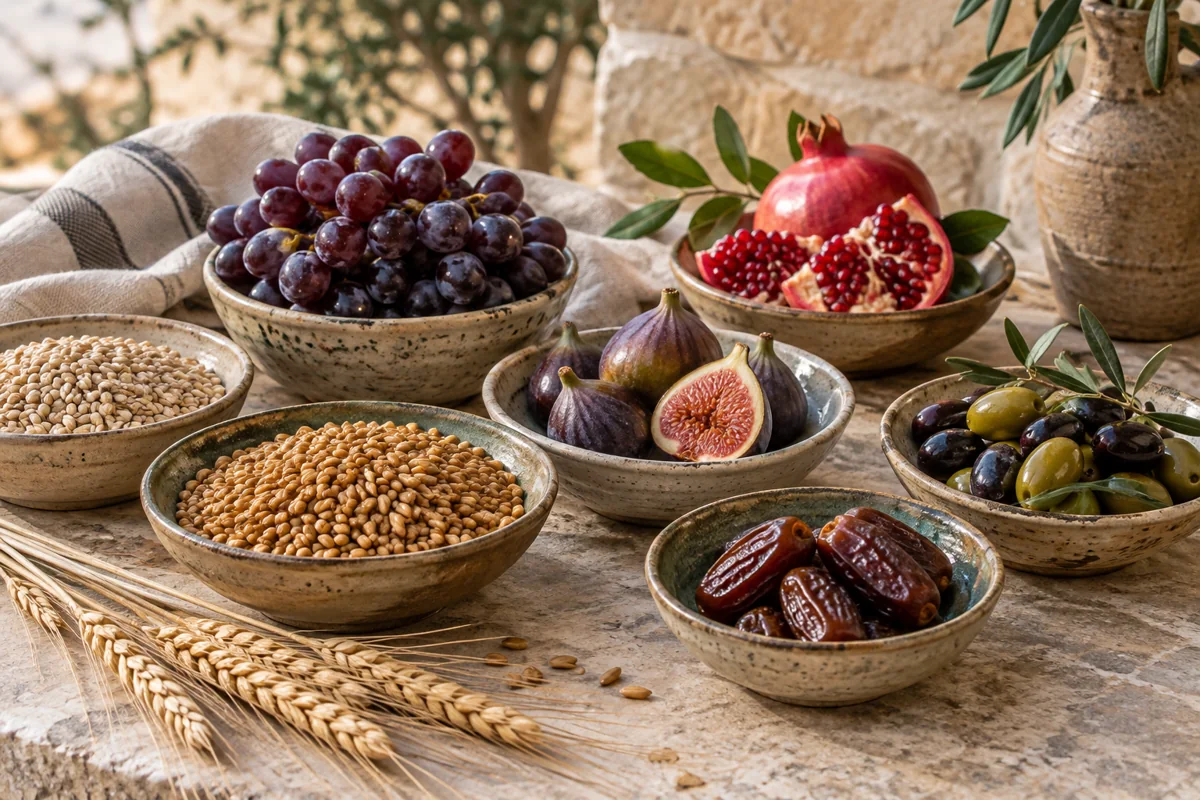
The Tu BiShvat seder connects the land’s fruits with gratitude for creation’s abundance. This varied custom has a special place in Kabbalistic tradition. Around the table, ordinary eating can become reflection: what have we received, how do we use it and what good quality can we cultivate through it?
Fruit, peel and seed
Seders based on Pri Etz Hadar consider different types of fruit: some eaten whole, some peeled and some with an inedible seed or stone. These differences open symbolic reflection on inner and outer life, discernment and repair.
The symbolism does not invite judging people by appearance. Rather, it can teach us to seek goodness, remove habits that harm relationships and remember that a hard shell may conceal sweetness.
The seven species as an opening for reflection
Wheat and barley recall the foundations of food and livelihood. Grapes connect with joy and Kiddush. Figs invite patience, pomegranates many good deeds, olives light and dates growth. These are interpretations from tradition, not properties that guarantee results simply through eating.
Choose one idea for each fruit and discuss it with the household. The seder then brings together Torah, family and gratitude rather than a race to eat many foods.
How to hold a respectful seder
Prepare suitable fruit, clarify the blessing order according to custom and inspect fruits that require checking. There is no obligation to overspend or eat something unsuitable for you. Study and gratitude are possible with a modest selection too.
Growth begins below the surface
The New Year for Trees falls when many trees are not yet in full bloom. Tractate Rosh Hashanah discusses its connection with the rainy season. This also invites interpretation: growth may begin at the roots before its results can be seen.
The same is true in learning and character development. Quiet persistence is not always immediately visible, but that does not make it worthless. Tu BiShvat invites patience with the process and gratitude for the conditions that let it grow.
Fruit blessings and their order
The Hebrew mnemonic ‘maga esh’ recalls mezonot, gefen, etz, adamah and shehakol. In practice, blessing order also depends on the foods present, the intention in eating and laws of precedence. A mnemonic is not a universal ruling; clarify doubts according to custom and circumstances.
Among the seven species, their order in the verse and proximity to the word ‘land’ matter. Alongside halakhic study, the seder invites attention to the words spoken and the food being blessed, without rushing from one blessing to another.
Petition and blessing
Prayers for a home, children and livelihood can be offered with hope. Do not attribute promises of fertility, finding a partner or healing to fruits. The main task is to bless with intention and connect prayer with responsibility, kindness and gratitude.
Further study: Pri Etz Hadar and Tu BiShvat seder customs in Jewish communities.